Brampton Facility Cleaning Pros
Your facility requires consistent cleaning schedules tailored to specific risks, processing volumes, food allergens, and inspection schedules, including verifiable documentation confirming food safety measures, inspection compliance, and public health regulations. The information following provide details about essential cleaning protocols.
Key Takeaways
- Brampton food safety cleaning experts support restaurants, grocery departments, commissaries, warehouses, bakeries, schools, mobile vendors, and allergen-sensitive operations.
- High-touch surfaces, food-contact equipment, kitchens, floors, drains, restrooms, and storage areas are treated using area-specific procedures to eliminate cross-contamination.
- Approved providers validate approved sanitizer dilution, alignment, and contact time, then record finishing with samples, audits, and action records.
- Sanitation schedules ought to comply with danger, throughput, switches, spills, and guidelines, with daily, periodic, and annual tasks assigned by area.
- Liability, colour-coded instruments, hazard analysis knowledge, health regulatory knowledge, WHMIS instruction, endorsements, and compliance-ready sanitation files are vital vendor traits.
Food Safety Cleaning Requirements for Brampton Operations
Brampton operations that deal with, maintain, prepare, package, or provide food require sanitation protocols. Implement it if your facility is covered by public health inspections, food codes, or HACCP requirements. The requirement covers eateries, dining facilities, warehouses, supermarket areas, meat counters, fish departments, retail outlets, and institutional kitchens.
Documented food sanitation is additionally required in warehouses, food manufacturing plants, cold storage sites, retail bakeries, school nutrition programs, banquet halls, and meal delivery hubs. Portable and seasonal operations count as well, examples including catering trucks, festival vendors, and pop-up food booths. Your facility demands established hygiene procedures if your staff process ingredients, portion ready-to-eat items, reheat products, or store allergens. In Brampton, food safety remains not discretionary; it constitutes regulatory, business, and safety requirements.
What Do Brampton Cleaning Professionals Handle?
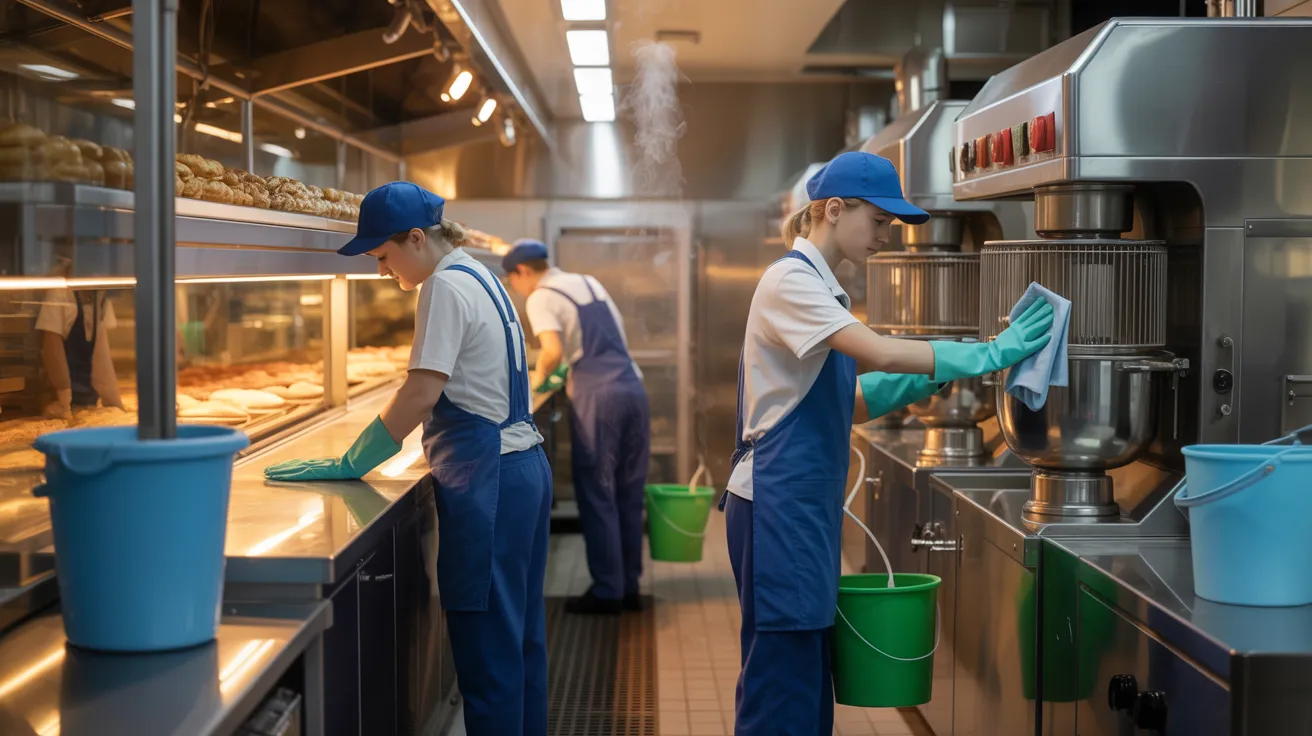
You need professional cleaners who disinfect frequently contacted areas, kitchen areas, floors, and restrooms to meet food safety and public health standards. They target these areas because they present the highest risk for contamination spread, slip hazards, and sanitation breaches.
Understanding their cleaning procedures enables you to validate your facility's cleaning meets operational demands and regulatory compliance.
Sanitizing High-Touch Surfaces
Managing high-touch surface disinfection is important for Brampton sanitation teams because frequently touched zones can transfer bacteria, viruses, and food residue across a location. You must have a scheduling system for cleaning frequently touched items like handles, plates, switches, railings, equipment controls, payment terminals, and fridge pulls. Using contact point analysis, teams locate every commonly touched point and determine cleaning intervals
Preventing contamination spread via replacing wipes, implementing unidirectional cleaning patterns, and separating sanitization equipment by zone maintains your sanitizing system remains verifiable, auditable, and audit-prepared.
Kitchen Areas, Floor Surfaces, and Bathroom Spaces
Expect Brampton cleaning experts to focus on kitchens, floors, and restrooms because each area carries distinct foodborne illness prevention, slip-and-fall, and public health risks. In industrial kitchens, you need grease removal from cooking stations, appliance surfaces, drain systems, preparation areas, and backsplashes to minimize contamination and pest pressure.
Documented floor maintenance is also provided as part of the service.
For restroom sanitation, cleaners sanitize high-touch surfaces, bathroom fixtures, stall dividers, supply dispensers, and trash receptacles, then refill items and eliminate smells. They also service restaurant moprooms, where chemical storage, sink hygiene, and drainage conditions can affect sanitation compliance and staff safety daily.
Why Food Safety Cleaning Matters in Brampton
Brampton operations demand food-safe cleaning standards to meet compliance obligations and pass audits. You also minimize bacterial spread through proper cleaning of food-preparation surfaces, appliances, and frequently-touched items. Most importantly, you help protect public health by lowering the risk of foodborne illness in your facility.
Sanitary Standards Adherence
Since Brampton food companies must follow stringent health requirements, your hygiene maintenance directly determines your competence to adhere to health codes, protect diners, and avoid regulatory penalties. You must maintain sanitary food-contact surfaces, verifiable cleaning logs, safe chemical management, and documented employee protocols that comply with municipal and provincial inspection expectations.
Should your cleaning standards deteriorate, you expose yourself to infractions, corrective directives, brand damage, and possible interruption to service during additional reviews or enforcement reviews.
Cross-Contamination Avoidance
Maintaining regulatory compliance copyrights on your power to stop cross-contamination during daily food handling and cleaning. You need to partition uncooked items from finished dishes, sterilize work zones between assignments, and store chemicals away from food-contact items. Clear procedures reduce transfer risks and reinforce steady regulatory adherence.
You should establish allergen separation to keep priority allergens from contacting shared surfaces, containers, or equipment. Employ separate boards, labeled implements, and strict utensil labeling so staff don't mix items throughout cooking or serving. Mandate washing hands following uncooked proteins, shellfish, egg items, or allergen products. Change cleaning rags frequently, and check disinfectant potency using test kits. When you train staff to follow these controls every shift, you build a more hygienic, secure workplace that satisfies Brampton's safety standards consistently.
Community Health Safety
When sanitation protocols breaks down, you don't just face inspection failure—you heighten the likelihood of foodborne illness impacting customers, staff, and the wider Brampton community. You also undermine your responsibility in safeguarding community wellness, especially in high-traffic food premises where contamination can spread quickly through surfaces, equipment, and touchpoints.
You must establish sanitation protocols that remove contaminants, disinfect correctly, and verify outcomes. This involves adhering to contact periods, utilizing approved disinfectants, logging schedules, and instructing staff to satisfy health-unit expectations. These mechanisms support pathogen reduction by decreasing microbes before contaminating food or surfaces. Across Brampton, strong cleaning safeguards vulnerable groups, limits outbreak risk, and demonstrates accountability. When you maintain proper protocols, you go beyond requirements—you meaningfully reduce risk and facilitate secure food handling throughout the area.
In What Ways Does Cleaning Help Achieve Food Safety Compliance?
Maintaining rigorous cleaning routines promotes food safety compliance by minimizing contamination hazards, preventing pathogen multiplication, and keeping your facility aligned with sanitation requirements under HACCP-based programs and public health regulations. You validate that food-handling surfaces appear visibly clean and microbiologically controlled, facilitating documented preventive controls and inspection readiness.
Cleaning initiatives additionally bolster allergen prevention by clearing residues that can lead to undeclared allergen exposure.
How Ought You Plan Commercial Cleaning Services?
surfaces can accumulate contamination
facility closures, seasonal soil accumulation, or periods of high pest activity. If your facility conducts promotions, catering, or public functions, plan cleaning right prior to and following for successful event turnaround
What Should You Look For in Brampton Cleaning Experts?
Screen providers initially by their food-safe sanitation requirements—not budget alone. You need to confirm that every company meets CFIA, public health, and HACCP standards for your operation. Demand proof of insurance, WHMIS compliance, training records, and management systems. Evaluate technician understanding of cross-contamination risks, chemical safety, and documented sanitation practices.
You should also assess business dependability and accountability. Request references from food facilities in Brampton, then examine response times, corrective actions, and communication standards. Confirm the company participates in supplier audits and can present audit-ready records when regulators or third parties request evidence. Check whether equipment is maintained is performed, color-coded implements are used appropriately, and facility-specific risks are recognized. A qualified provider protects compliance, product integrity, and your brand reputation.
Which elements are part of a hygiene cleaning program?
Write out a framework that outlines every sanitation activity, guideline, and role before production begins. You should record cleaning schedules, approved products, ratios, contact periods, tools, and validation approaches for each zone, surface, and piece of equipment. Ensure you include pre-operational inspections, corrective actions, and employee training requirements.
Your strategy should also address cross-contamination controls, waste handling, pest-prevention measures, and documented schedules for facilities, drains, flooring, and food-preparation surfaces. Outline how you'll distinguish between uncooked and prepared items, support ingredient tracking, and maintain accurate allergen labeling through validated cleaning between product changes. You should establish accountability, document signed records, and evaluate results against regulatory standards, HACCP controls, and customer requirements. When gaps appear, modify procedures immediately and retrain staff.
Commonly Requested Inquiries
Can cleaning services support nighttime operations in Brampton facilities?
If you run regulated facilities, you'll also need records that support inspections and ensure compliance.
Do sanitation professionals provide emergency spill response solutions?
Yes, you can find many Brampton cleaning professionals offering complete guide emergency response options. They manage hazardous materials, evaluate risks, contain affected areas, and execute rapid cleanup to reduce exposure and limit operational impact. You should verify response times, training credentials, safety measures, and disposal methods. If your facility must meet standards, pick a provider that documents incidents, follows procedures, and ensures verification.
Are eco-friendly disinfectants suitable for food-handling equipment?
Absolutely, natural disinfectants remain appropriate for surfaces contacting food when you choose items marked food-safe and regulatory compliant. You must verify exposure duration, dilution ratios, and rinsing needs in advance of use. Natural-based solutions decrease harsh chemical exposure, though you require proof of efficacy against relevant pathogens. For maintaining residue free surfaces, stick to exact manufacturer guidelines and ensure the sanitizer meets food industry regulations.
Do cleaning plans support seasonal production changes?
Absolutely, sanitation programs enable modification for production fluctuations. Revise schedules, personnel, sanitizers, and testing procedures to align with operational cycles while maintaining compliance standards. Lower production downtime through timing sanitization around changeovers, high demand periods, and equipment use patterns. Also revise SSOPs, training, and environmental monitoring to reflect seasonal hazards, emerging allergens, or higher contamination levels. Ongoing evaluations keep the schedule efficient.
Do professional cleaning services train employees on hygiene standards?
Yes, professional cleaning services typically educate your team on hygiene standards. You get staff training on proper chemical use, contact times, cross-contamination prevention, equipment disassembly, and documentation. They typically align training with HACCP, GMP, and CFIA or local public health requirements. Many perform hygiene inspections to verify compliance, identify gaps, and strengthen remedial steps. This allows you to sustain uniform processes, succeed in audits, and reduce food safety risks regularly.
Summary
Partnering with Brampton commercial cleaning and food safety professionals goes beyond tidying—it ensures your facility meets inspection standards and your standards remain compliant. From processing facilities to kitchens, each sanitized surface and organized section lessens contamination risk and avoids costly disruptions. By scheduling maintenance at suitable frequencies and executing a comprehensive cleaning strategy, you protect your workforce, clients, and your image. In a heavily regulated sector, clean environments can't be overlooked—they're vital to proper management.